

December in Central Europe has a perception problem. Everyone assumes Vienna, Prague and Budapest cost roughly the same because they're less than three hours apart by train. That's not true.
The price difference in lodging of the same category between Vienna and Budapest can easily reach 45% during peak Christmas season. That gap completely changes the final math of the trip.
This seven-day, six-night route is built with rail logic: Vienna as the entry point, because it has more direct flights from the Americas and a better airport-to-center connection, and from there two high-speed train legs. Three Christmas markets, a single mode of transport between cities, and an order that avoids dragging suitcases around pointlessly in December. Let's get to the real numbers.
Why train, and why Vienna as the anchor
🔗 Recommended · Kiwi.comThe three capitals form an efficient triangle for train travel. Vienna-Prague is about four hours, Vienna-Budapest two and a half hours, and Prague-Budapest runs about six and a half to seven hours. That's why the logical itinerary always puts Vienna at the start or in the middle, never at the end.
Vienna works as the anchor for three concrete reasons: it has far more intercontinental air connections than Prague or Budapest, the City Airport Train and the metro get you downtown in twenty minutes, and geographically it saves you from hauling luggage on the longest leg.
The train drops you literally in the heart of each city. You skip airports, security, transfers, and the unnecessary cold of waiting around in terminals. Plus, you travel with your winter luggage without strict weight limits. For a trip where you're already going to walk between twelve and fifteen kilometers a day between stalls, palaces and cobblestone streets, the comfort of the train outweighs any marginal savings from flying low-cost.
2026 calendar: when the markets open
Based on the historical pattern of the last eight years, here are the expected dates for 2026:
- Vienna (Christkindlmarkt at Rathausplatz): opening mid-November, closing December 26.
- Prague (Old Town Square and Wenceslas Square): opening in the last days of November, closing between January 6 and 9.
- Budapest (Vörösmarty tér): opening late November, closing between January 1 and 5.
These are projections based on past behavior, not confirmed dates. Official dates are published between August and October 2026, so check directly with wien.info, prague.eu and budapestinfo.hu a month before buying tickets.
The window with the best price-to-experience ratio is clear: December 1 to 10. The markets are already fully set up and decorated, but the crowds of the two weeks before Christmas haven't hit yet, when hotels jump 25 to 35%. Traveling in that first ten-day stretch gives you peace of mind and more stable prices.
Day-by-day itinerary
Days 1-3: Vienna. You arrive, check in, and head straight out to the Christkindlmarkt in front of City Hall. The first day is for getting acclimated with mulled wine while you adjust to the cold. On the second day, spend the morning at Schönbrunn Palace and the afternoon at its smaller, more artisanal market, which tends to be less crowded. Use the third day for the Museumsquartier or a traditional Viennese coffeehouse before catching the train to Prague in the afternoon. Three full days give you the right pace without wearing you out.
Days 4-5: Prague. Arrival in the late afternoon/evening. Day four starts early at Prague Castle; in the afternoon you walk Charles Bridge and Old Town Square. The market in front of the astronomical clock, at night, is the most photogenic of the three. Day five: Jewish Quarter in the morning, the Wenceslas Square market in the afternoon, and a train to Budapest (there are direct options or a comfortable connection in Vienna). Prague is best enjoyed with two intense nights.
Days 6-7: Budapest. First night straight to the Vörösmarty tér market. Day six: Széchenyi thermal baths in the morning — the steam rising off the hot water into the cold December air is one of the best feelings of the whole trip — Parliament and the Danube riverbank in the afternoon. Day seven: free morning for Fisherman's Bastion or one last pass through the market before the flight home. Budapest rewards staying longer.
Train vs. flying between cities
Flying between these three cities almost never makes sense. The distances are short, and the total door-to-door time — transfers, check-in, security, baggage claim — ends up equal to or longer than the train.
The train drops you at central stations, without wasting time or exposing you to more cold, and you can bring your coat, boots and suitcase without any drama. On a leisure trip where you're already wearing layers all day, comfort wins. Buy tickets in advance at oebb.at or cd.cz. Prices rise as the date approaches, just like hotels.
Lodging: where your money really stretches
This is where the difference really shows. Based on our updated estimates for the 2025-2026 Christmas season in the mid-range/budget category (three-star hotels or a well-located Airbnb):
- Vienna: 95-125 EUR per night.
- Prague: 75-105 EUR per night.
- Budapest: 55-80 EUR per night.
Budapest still has a noticeably lower cost of living. If your budget is tight, the smart move is to trim Vienna to two effective nights — the main market can be well enjoyed in that time — and add one or two extra nights in Budapest, where every euro buys you more experience, whether in lodging, food, or thermal baths.
Always check real prices close to your travel date. The difference between traveling on December 4 versus the 21st can be 30% in lodging alone. In Vienna, look at areas like Neubau or Josefstadt. In Prague, Vinohrady offers good value. In Budapest, District VII or the area around Vörösmarty give you location without Vienna-level prices.

Food: Christmas market strategy
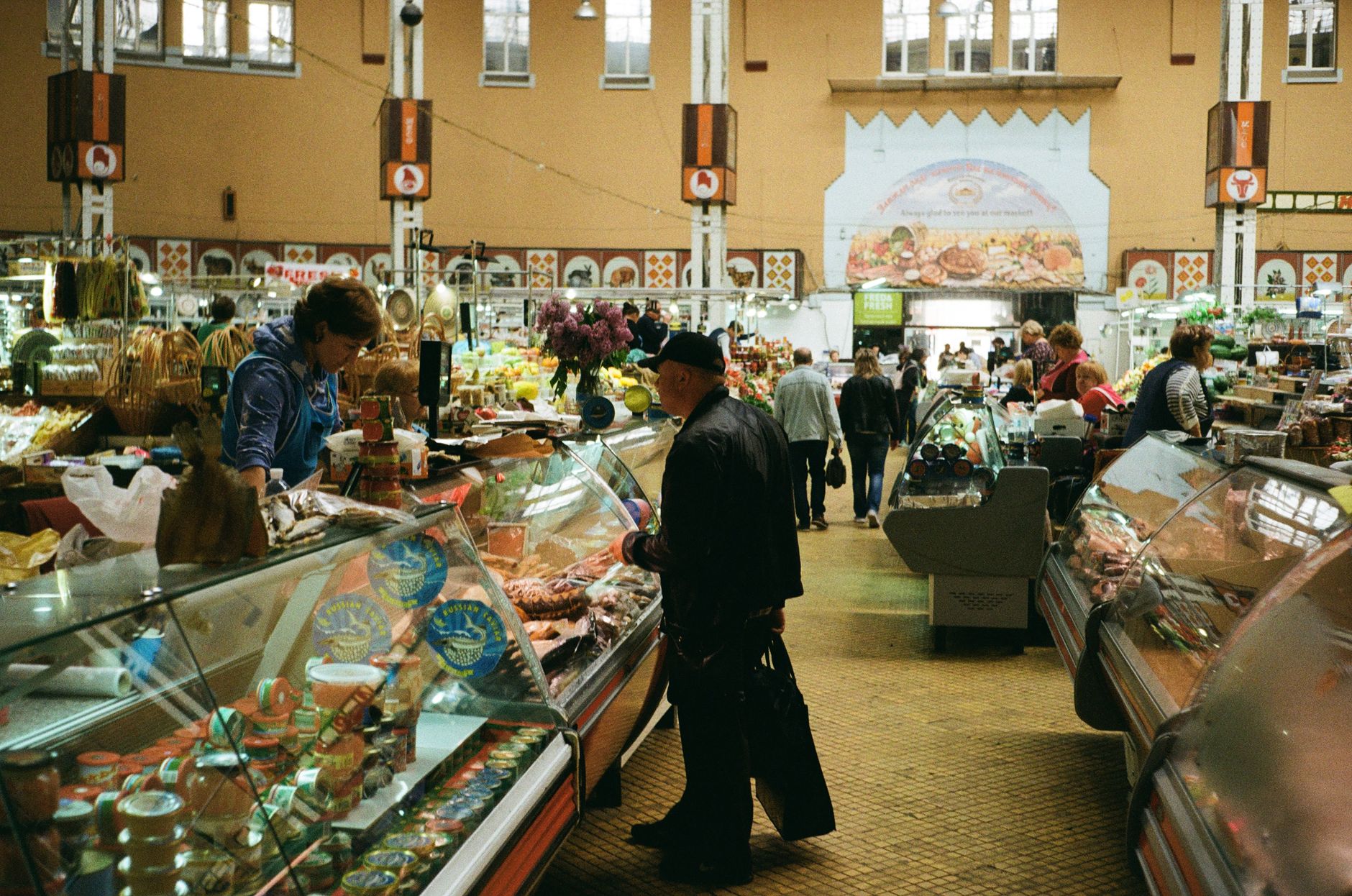
Market food is a central part of the experience, not a side expense. Glühwein, lángos, trdelník, roasted chestnuts and sausages are meant to be bought while walking between the stalls.
A realistic daily budget per person — simple breakfast, market lunch, and a more formal dinner — based on our estimates:
- Vienna: 42-52 EUR.
- Prague: 32-42 EUR.
- Budapest: 26-36 EUR.
The most efficient strategy is to save the sit-down restaurant budget for just one signature dinner per city — Wiener Schnitzel in Vienna, authentic goulash in Budapest — and cover the rest directly from the stalls. You'll eat better, warmer, and surrounded by the Christmas atmosphere while spending half as much. Carry cash in Czech koruna and forints; many small stalls don't take cards.
How much the whole trip costs, depending on where you're flying from
Here's the realistic breakdown for a solo traveler in the budget-to-mid category, six nights, seven days, including everything except international flights, which change constantly.
| Item | Mexico (MXN approx / USD) | LATAM (USD approx) | United States (USD approx) |
|---|---|---|---|
| International flight (round trip or open-jaw) | Check current fares | Check current fares | Check current fares |
| Vienna-Prague-Budapest train (2 legs) | Check oebb.at / cd.cz | Check oebb.at / cd.cz | Check oebb.at / cd.cz |
| Lodging, 6 nights (mix of Vienna/Prague/Budapest) | 480-580 EUR | 480-580 EUR | 480-580 EUR |
| Food, 7 days | 260-330 EUR | 260-330 EUR | 260-330 EUR |
| Admissions and activities | 125-155 EUR | 125-155 EUR | 125-155 EUR |
The fixed on-the-ground cost, once you're in Europe, runs about 865-1,065 EUR per person. This figure doesn't change whether you're flying from Mexico City, Bogotá, or New York. The big variable is the international flight: from the US East Coast you'll usually find better prices than from Mexico City or South America. If your trip is in December 2026, set up price alerts now and consider open-jaw flights (fly into Vienna, out of Budapest).
Practical logistics: Schengen, ETIAS, insurance and weather
All three cities are within the Schengen Area, so you move between them without passport controls; just keep your ID handy. Mexicans and most Latin Americans don't need a visa for tourist stays of up to ninety days, but you will need ETIAS once it's fully active. Apply for it online ahead of time.
Travel insurance with high medical coverage is practically mandatory in practice. In December, slips on ice and seasonal flu are the most common incidents. Choose a policy that covers repatriation and cancellation due to illness.
The weather is cold: between 0 and 5°C during the day and below zero at night. You need real layers: a thermal base layer, a heavy sweater, an actual winter coat, a hat, gloves, and waterproof boots with good grip. Wet cobblestone streets or melting snow are treacherous. A good pair of boots with a non-slip sole makes the difference between enjoying yourself and suffering.
Vienna offers elegant, refined markets. Prague delivers the most magical postcard. Budapest combines quality with prices that let you relax. If you measure experience per euro spent, Budapest wins by a wide margin: same quality of Christmas market, same impressive architecture, same atmosphere of lights and mulled wine, but at a notably lower cost.
The smart move is to trim Vienna down to a reasonable minimum — two effective nights are enough — and extend your stay in Budapest. That said, the factor that moves your total budget the most isn't where you fly from, but exactly which week you travel. The first week of December gives you everything running at full capacity without the inflated prices of the weeks closer to Christmas.
The best trip isn't the most expensive or the cheapest — it's the best reasoned one.
Talk to Osi on Telegram and we'll help you crunch the numbers for YOUR route.
Sources
- wien.info — Official Christkindlmarkt dates and details
- prague.eu — Updated information on Prague's Christmas markets
- budapestinfo.hu — Official guide to the Vörösmarty tér market
- oebb.at and cd.cz — Real 2025-2026 train schedules and prices
- Our own data on 2023-2025 Christmas season price behavior